Coal Chemical · Demineralized Water & Water Reuse
Xinjiang Zhongneng Wanyuan Chemical Demineralized Water & Reclaimed Water Membrane Systems
Two systems were retrofitted in one campaign: demineralized water at 145 m³/h design capacity and reclaimed water at 70 m³/h. After start-up, salt rejection held above 99% with permeate conductivity down to 3.2–3.5 μS/cm.
Coal ChemicalTwo-Pass ROReclaimed Water ReuseFouling-Resistant Membrane
145Demineralized water design m³/h
>99System salt rejection %
3.2–3.5Permeate conductivity μS/cm
80System recovery %
01
Project Overview
Client, scale, feed water and project background
Xinjiang Zhongneng Wanyuan Chemical is located in the Manas County industrial park of Changji Prefecture. Its process units demand high demineralized water quality and uninterrupted supply, while the park also sets explicit targets for wastewater reuse rate. This retrofit covered both the reverse osmosis system at the demineralized water station and the reclaimed water RO system, using a single fouling-resistant membrane model across two very different feed conditions.
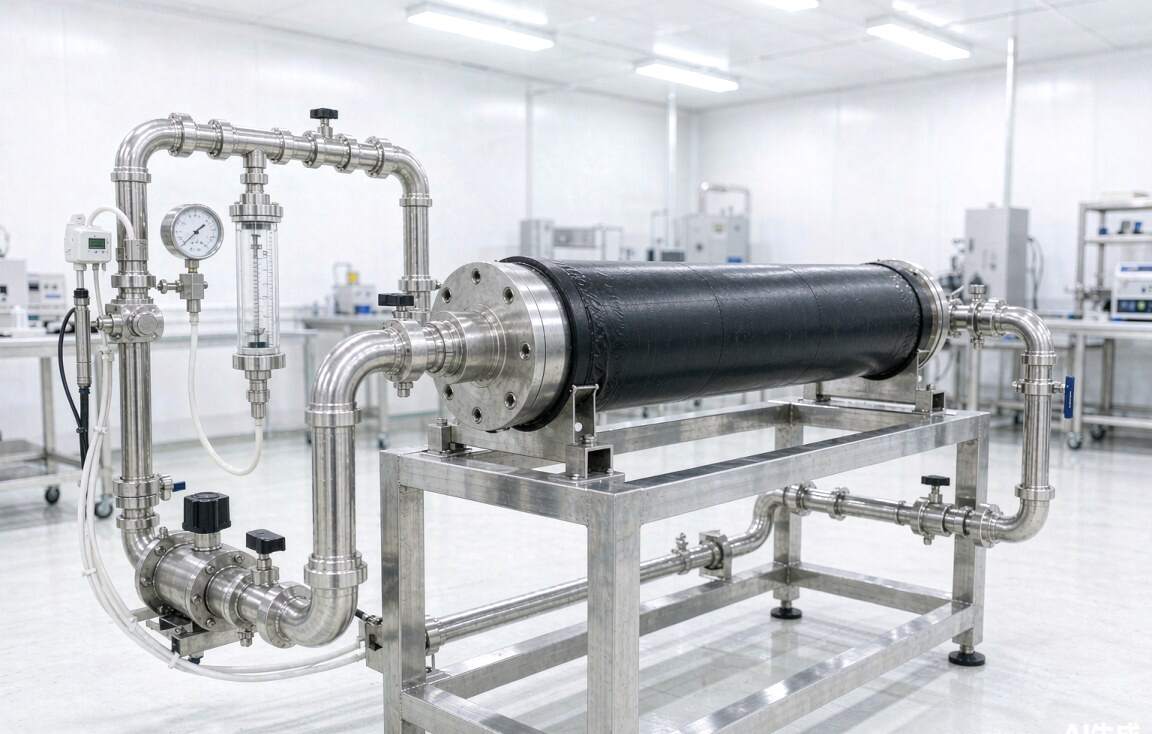
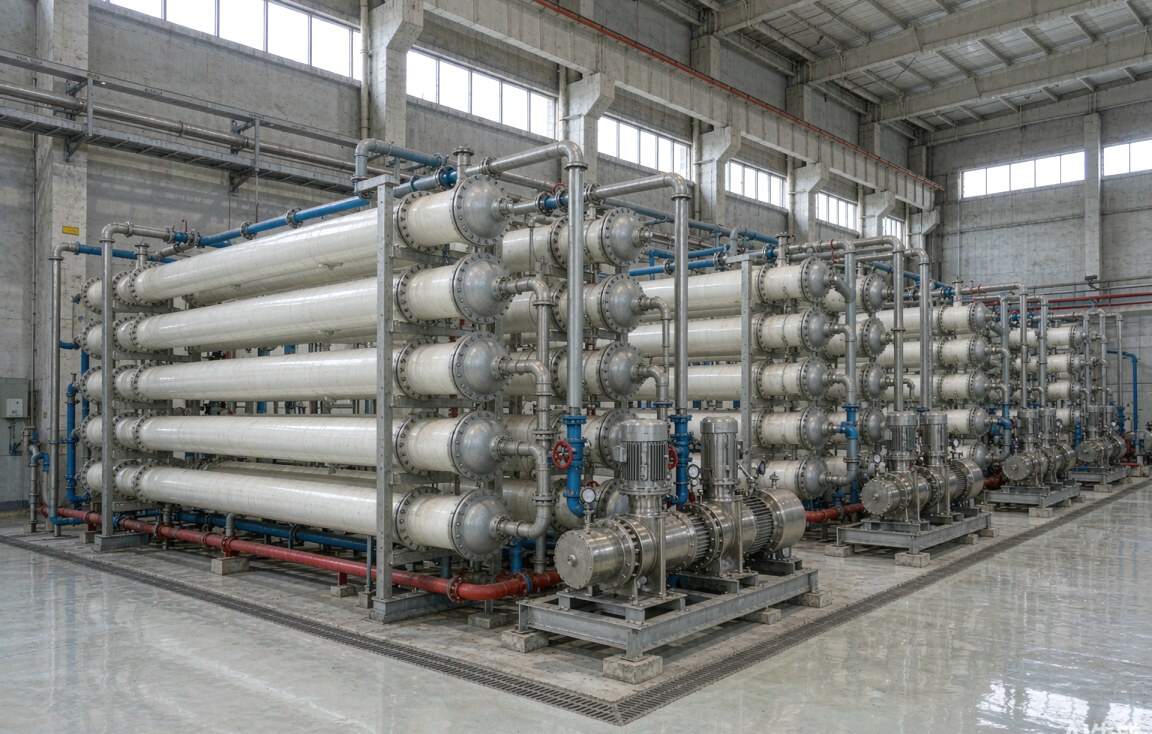
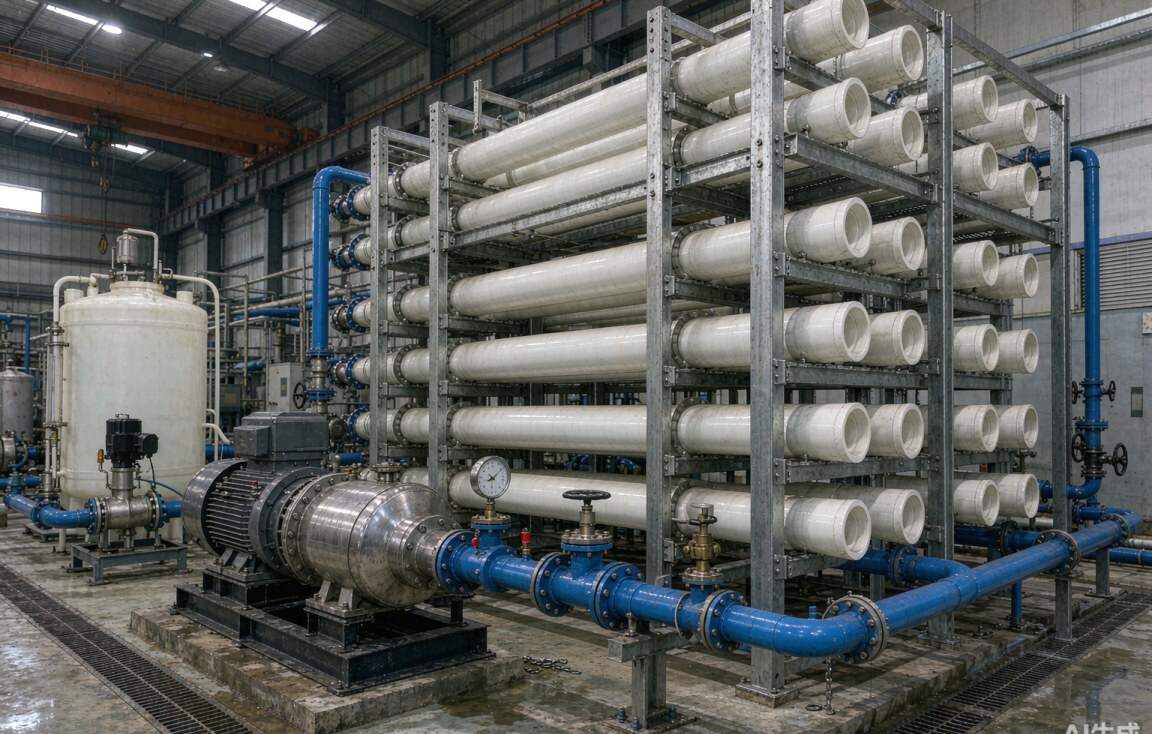
The demineralized water system treats feed of about 477 μS/cm with moderate total hardness and alkalinity; the reclaimed water system receives about 1771 μS/cm with total hardness of 790 mg/L plus a certain load of organics and ammonia nitrogen, placing far higher demands on fouling resistance. QC-LP-8040-400FR elements were selected, loaded in a two-stage arrangement with inter-stage boosting to balance flux between stages.
Membrane elements arrived on site on 14 April 2024; installation, flushing and soaking followed immediately, commissioning began on 15 April, and a continuous 72-hour assessment run started on 17 April: first-pass second-stage output exceeded 90 m³/h, total output across stages one to three exceeded 103 m³/h, concentrate 26 m³/h, recovery 80%, feed conductivity 356 μS/cm and permeate conductivity 3.2–3.5 μS/cm, with salt rejection above 99% — meeting the owner's assessment requirements.
- Client
- Xinjiang Zhongneng Wanyuan Chemical Co., Ltd.
- Location
- Manas County Industrial Park, Changji Prefecture, Xinjiang
- Project type
- RO membrane replacement for demineralized water / reclaimed water reuse
- System scale
- 2 systems (demineralized 145 m³/h, reclaimed 70 m³/h)
- Feed water
- Demineralized: process water (477 μS/cm); Reclaimed: park reclaimed water (1771 μS/cm)
- Product water use
- Boiler make-up water / process water / wastewater reuse
- Membrane elements
- QC-LP-8040-400FR, 6-element pressure vessels, 2 stages
- Commissioning
- April 2024
02
Process Design
System flow, design boundaries and key control points
01Raw water / reclaimed water
→02Multi-media filtration + UF
→03Cartridge filter
→04High-pressure pump
05First-pass RO
→06Second-pass RO
→07Demineralized tank / reuse basin
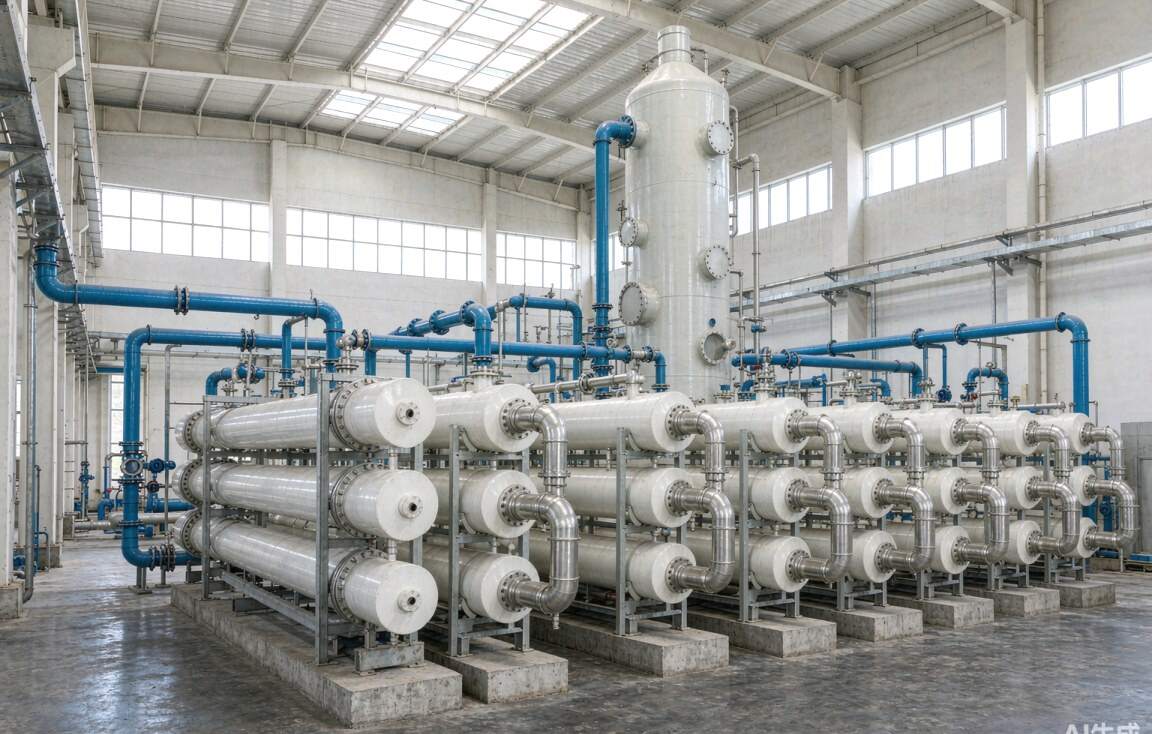
→Both systems share the same pretreatment + two-pass RO framework; the reclaimed water train strengthens pretreatment and antiscalant dosing to address high hardness and high COD, controlling scaling and biofouling on the membrane surface.
One membrane model covering two duty conditions
The demineralized and reclaimed water systems use the same fouling-resistant model, simplifying spare parts and O&M; different feed salinities are accommodated by adjusting the arrangement and recovery rate.
Two-stage arrangement with inter-stage boosting
A roughly 2:1 first-stage arrangement with inter-stage boosting balances flux and differential pressure between stages, avoiding scaling on the second-stage concentrate side and rapid flux decline.
Antiscalant strategy for high-hardness reclaimed water
With total hardness of 790 mg/L, antiscalant dosing and recovery control (70%) keep the LSI below the scaling risk threshold.
Assessed on a continuous 72-hour run
Acceptance is judged on permeate flow, conductivity and recovery over 72 continuous hours rather than instantaneous readings, ensuring the data represent long-term operating performance.
03
Key Equipment & Membrane Configuration
Membrane models, loading arrangement and auxiliary equipment
| System | Membrane model | Loading arrangement | Design permeate | Key feed indicators |
|---|---|---|---|---|
| Demineralized water | QC-LP-8040-400FR | 2 stages, 6-element vessels | 145 m³/h (assessed ≥103 m³/h) | Conductivity 477 μS/cm |
| Reclaimed water reuse | QC-LP-8040-400FR | 2 stages, 6-element vessels | 70 m³/h | Conductivity 1771 μS/cm, total hardness 790 mg/L |
| Auxiliaries | Cartridge filter, high-pressure pump, inter-stage booster pump, antiscalant / reducing agent dosing | — | — | — |
Element counts for both systems follow the on-site pressure vessel specification (6 elements, 2 stages); refer to the as-built list for exact quantities.
04
Operating & Acceptance Data
Field measurements versus contractual guarantee values
| Assessment item | Contractual / design guarantee | Measured at acceptance | Verdict |
|---|---|---|---|
| Demineralized water output | ≥103 m³/h (stages 1–2 ≥90 m³/h) | Stages 1–2 >90, stages 1–3 >103 m³/h | Pass |
| Demineralized salt rejection | ≥99% within 1 year, ≥98% within 3 years | >99% | Pass |
| Reclaimed water output | ≥70 m³/h | Design value achieved | Pass |
| Reclaimed salt rejection | ≥98% within 1 year, ≥96% within 3 years | Guarantee achieved | Pass |
| System recovery | Demineralized 80%, reclaimed 70% | 80% / 70% | Pass |
| Permeate conductivity | — | 3.2–3.5 μS/cm (feed 356 μS/cm) | Excellent |
| Continuous run assessment | 72 hours | 72 hours continuous, parameters stable | Pass |
Concentrate discharge from the demineralized water system is 26 m³/h at 80% recovery; the reclaimed water system is controlled at 70% recovery to suppress scaling. Data above are taken from the 72-hour continuous operating record starting 17 April 2024.
05
Project Results
Client acceptance conclusions and reusable engineering experience
✓
Two systems delivered in one campaign
Membrane replacement and commissioning for both systems were completed within a single shutdown window, shortening plant downtime.
✓
Marked improvement in product water quality
Permeate conductivity of 3.2–3.5 μS/cm with salt rejection above 99% satisfies boiler make-up and process water requirements.
✓
Reuse rate meets park targets
The reclaimed water system runs stably at 70% recovery, cutting both fresh water intake and wastewater discharge.
✓
Experience gained on high-hardness reclaimed water
A complete parameter set of enhanced pretreatment + antiscalant control + inter-stage boosting has been established for high-hardness, high-COD reclaimed water.