Coal Mine Heat Source Plant · Boiler Make-up Water
Jinneng Holding Silaogou Mine Heat Source Plant 100 m³/h × 3 RO Upgrade
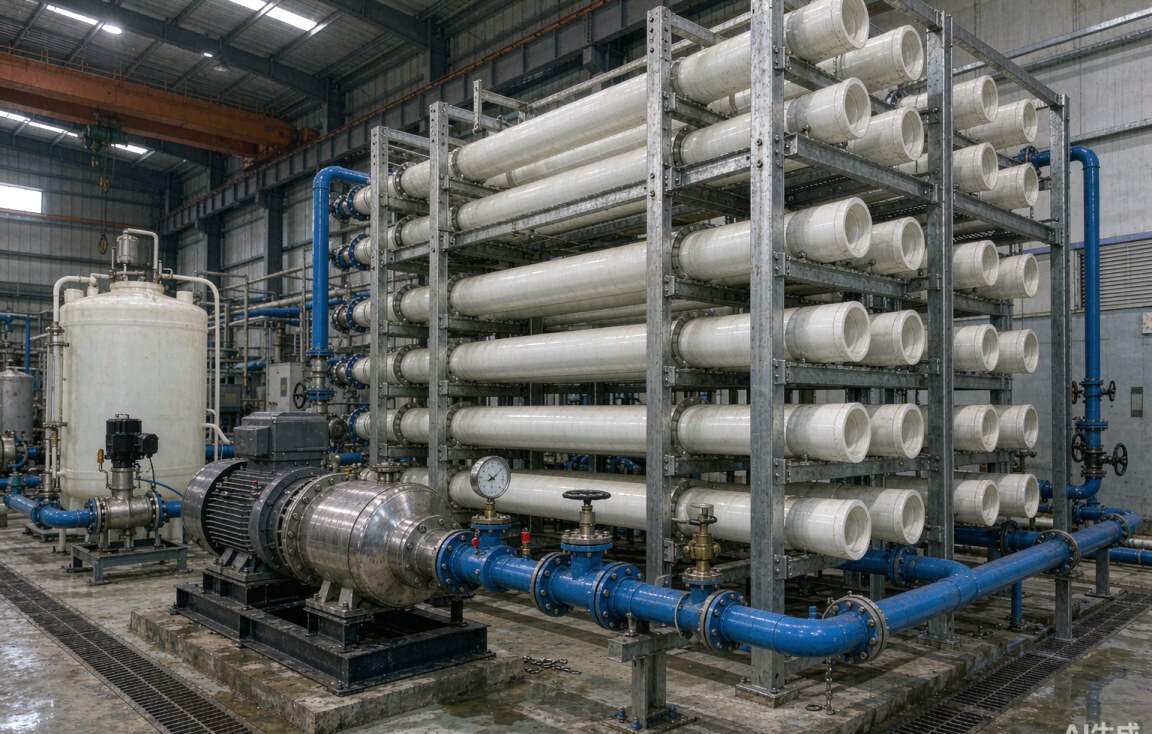
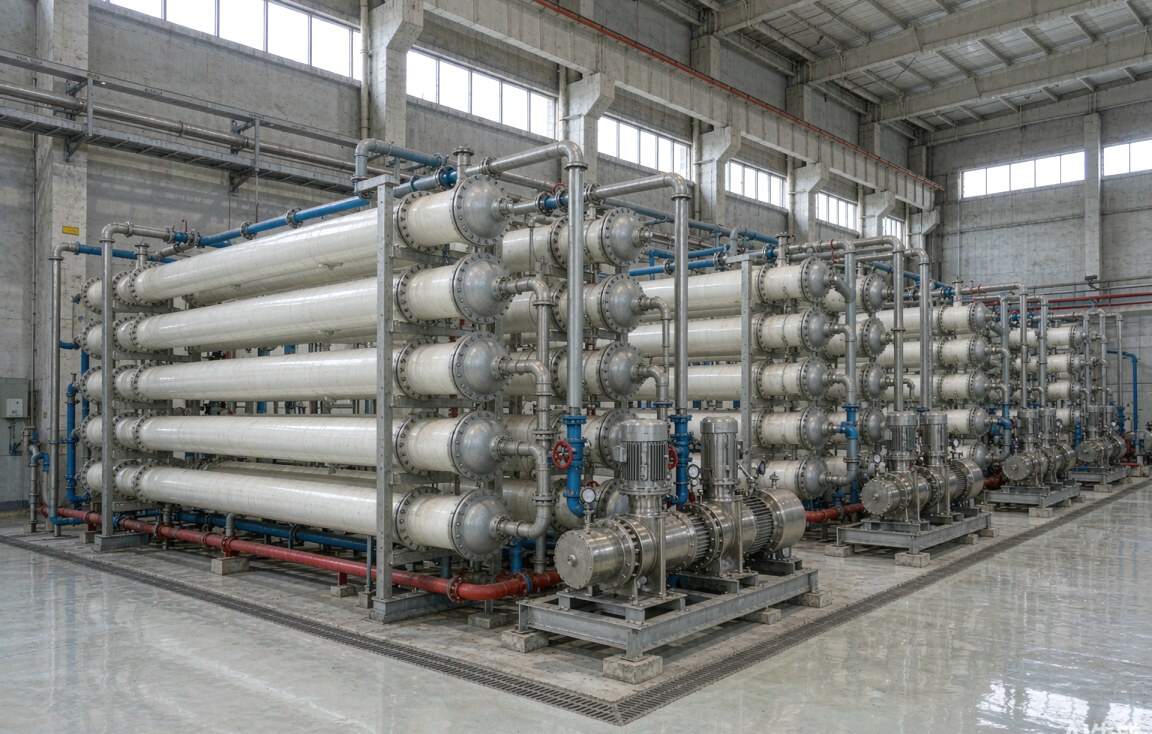
Using condensate return as feed water, a new 3 × 100 m³/h RO system was built with three UF units, three cation exchangers and reused softeners. Product hardness is 0.03 mmol/L with conductivity of 5.5–8 μS/cm.
Coal Mine Heat Source PlantCondensate ReturnUF + ROBoiler Make-up Water
98.7Salt rejection %
5.5–8Permeate conductivity μS/cm
75System recovery %
0.03Product hardness mmol/L
01
Project Overview
Client, scale, feed water and project background
The Jinneng Holding Coal Industry Group Silaogou Mine heat source plant upgrade is located in Yungang District, Datong, Shanxi, inside the newly built central heating boiler house of Silaogou Mine. The boiler make-up water system uses condensate return as its feed, with a new 100 m³/h × 3 RO system and reuse of the existing softening units.
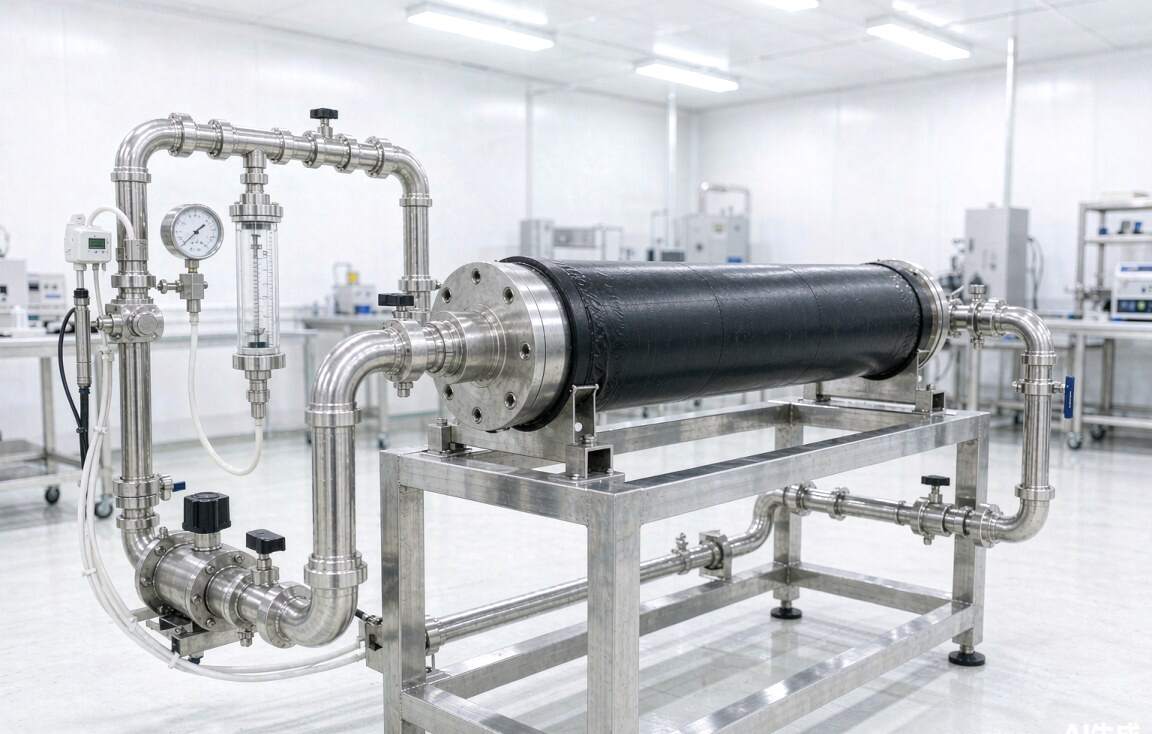
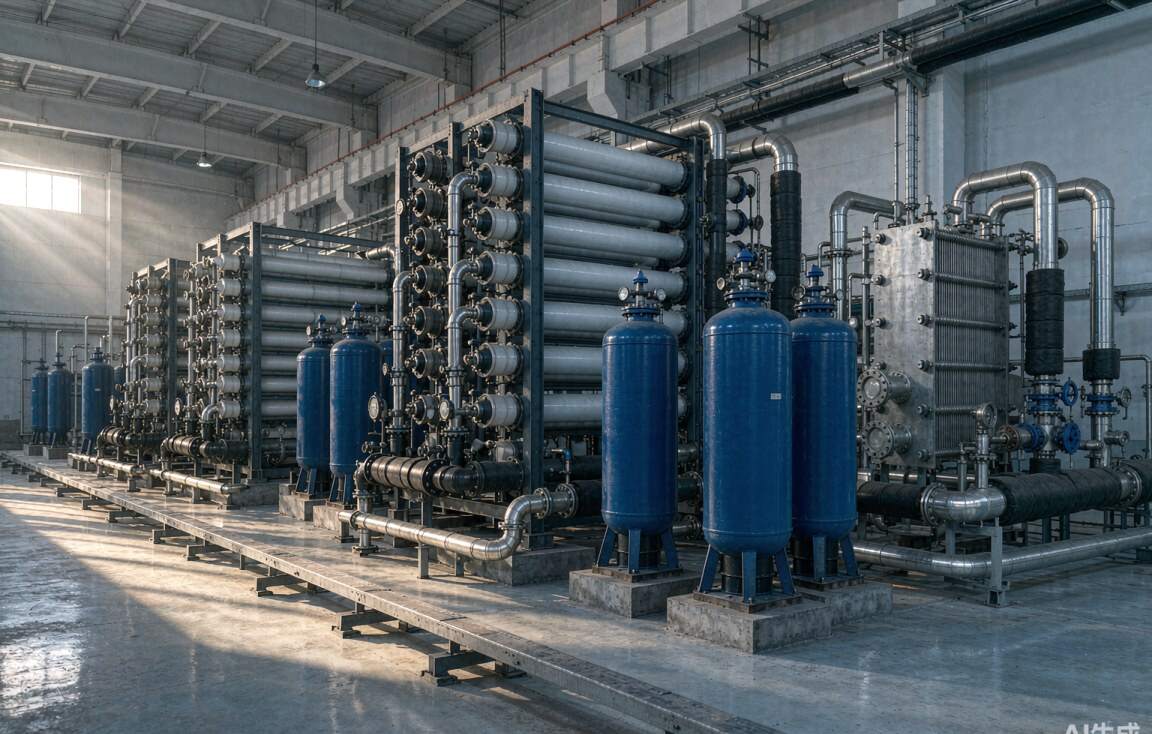
The system comprises two tubular heat exchangers, two plate heat exchangers, three ultrafiltration units (150 m³/h each), three RO units (100 m³/h each), three cation exchangers (100 m³/h each), two multi-media filters and three fully automatic softeners (reused). The RO system is designed for 75% recovery.
Product water targets are hardness 0.03 mmol/L, conductivity 110 μS/cm (25 °C) and pH 4–5 (demineralized and softened water). Installation ran from 5 December to 12 December 2023, with acceptance on 15 December. After start-up, permeate conductivity measured 5.5–8 μS/cm with 98.7% salt rejection, well inside the design limits.
- Client
- Jinneng Holding Coal Industry Group, Silaogou Mine Heat Source Plant
- Location
- Yungang District, Datong, Shanxi Province
- Project type
- Upgrade / new build (boiler make-up water system)
- System scale
- 100 m³/h × 3 RO units
- Feed water
- Condensate return
- Product water use
- Central heating boiler make-up water
- Product water targets
- Hardness 0.03 mmol/L, conductivity ≤110 μS/cm, pH 4–5
- Acceptance date
- 15 December 2023
02
Process Design
System flow, design boundaries and key control points
01Condensate return
→02Tubular / plate heat exchanger
→03Ultrafiltration 3 × 150 m³/h
→04Reverse osmosis 3 × 100 m³/h
→05Cation exchanger 3 × 100 m³/h
→06Boiler make-up water
Two multi-media filters and three fully automatic softeners (reused) complete the train; heat exchangers bring condensate return down to a temperature range suitable for the membrane system, and ultrafiltration acts as the pretreatment barrier for RO.
Condensate return reuse lowers make-up demand
Substituting condensate return for fresh water reduces both chemical consumption in softening and purchased water volume for boiler make-up.
UF and RO capacity matched
Three UF units at 150 m³/h serve three RO units at 100 m³/h. Back-calculated at 75% recovery this leaves about 12% UF margin to cover backwashing and water quality swings.
Heat exchangers arranged in groups
Two tubular and two plate heat exchangers allow seasonal switchover and maintenance isolation, preventing a single failure from shutting down the whole production line.
Combining reuse with new build
The fully automatic softeners were reused while new cation exchangers were installed, controlling retrofit investment while still meeting water quality requirements.
03
Key Equipment & Membrane Configuration
Membrane models, loading arrangement and auxiliary equipment
| Equipment | Quantity | Specification | Remarks |
|---|---|---|---|
| Tubular heat exchanger | 2 | — | Condensate return cooling |
| Plate heat exchanger | 2 | — | Group switchover / maintenance isolation |
| Ultrafiltration units | 3 | 150 m³/h each | RO pretreatment |
| Reverse osmosis units | 3 | 100 m³/h each | 75% recovery |
| Cation exchangers | 3 | 100 m³/h each | Polishing demineralization |
| Multi-media filters | 2 | — | Turbidity reduction |
| Fully automatic softeners | 3 | Reused | Hardness reduction |
Equipment quantities and specifications are taken from the system description in the acceptance report; as-built drawings take precedence.
04
Operating & Acceptance Data
Field measurements versus contractual guarantee values
| Item | Design / limit value | Measured or notes |
|---|---|---|
| Product hardness | 0.03 mmol/L | Design requirement met |
| Product conductivity | ≤110 μS/cm (25 °C) | Measured 5.5–8 μS/cm |
| Product pH | 4–5 (demineralized and softened water) | Meets boiler make-up requirements |
| System salt rejection | — | 98.7% |
| System recovery | 75% | Design value achieved |
| Operating mode | 24 hours continuous | Three units in parallel |
Measured permeate conductivity of 5.5–8 μS/cm is far below the 110 μS/cm design limit, indicating good membrane rejection performance and system integrity. Product hardness is controlled at 0.03 mmol/L, satisfying heating boiler make-up requirements.
05
Project Results
Client acceptance conclusions and reusable engineering experience
✓
Product water better than design
Permeate conductivity of 5.5–8 μS/cm is only 5%–7% of the 110 μS/cm design limit, providing margin for long-term safe boiler operation.
✓
Cascade use of condensate return
Replacing fresh water with condensate return reduces the load on softening and demineralization as well as regenerant consumption.
✓
Three units in parallel with adjustable load
The 3 × 100 m³/h split arrangement can start and stop units according to heating load, avoiding the accelerated fouling caused by low flux at low load.
✓
Upgrade combined with equipment reuse
The new build was completed while retaining the existing softeners, achieving a water quality upgrade within a controlled investment.