Coking · Power Plant Boiler Make-up Water
Hejin Yumenkou Coking 1.72 Mt/a Coking Project Demineralized Water Station
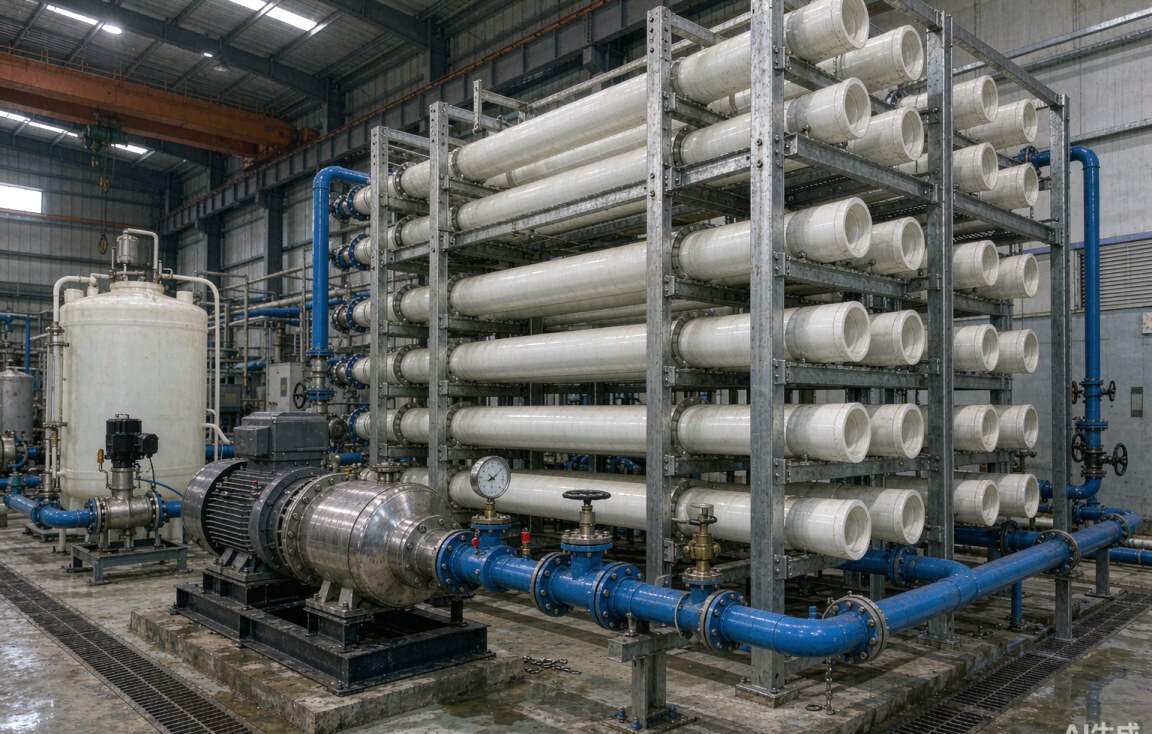
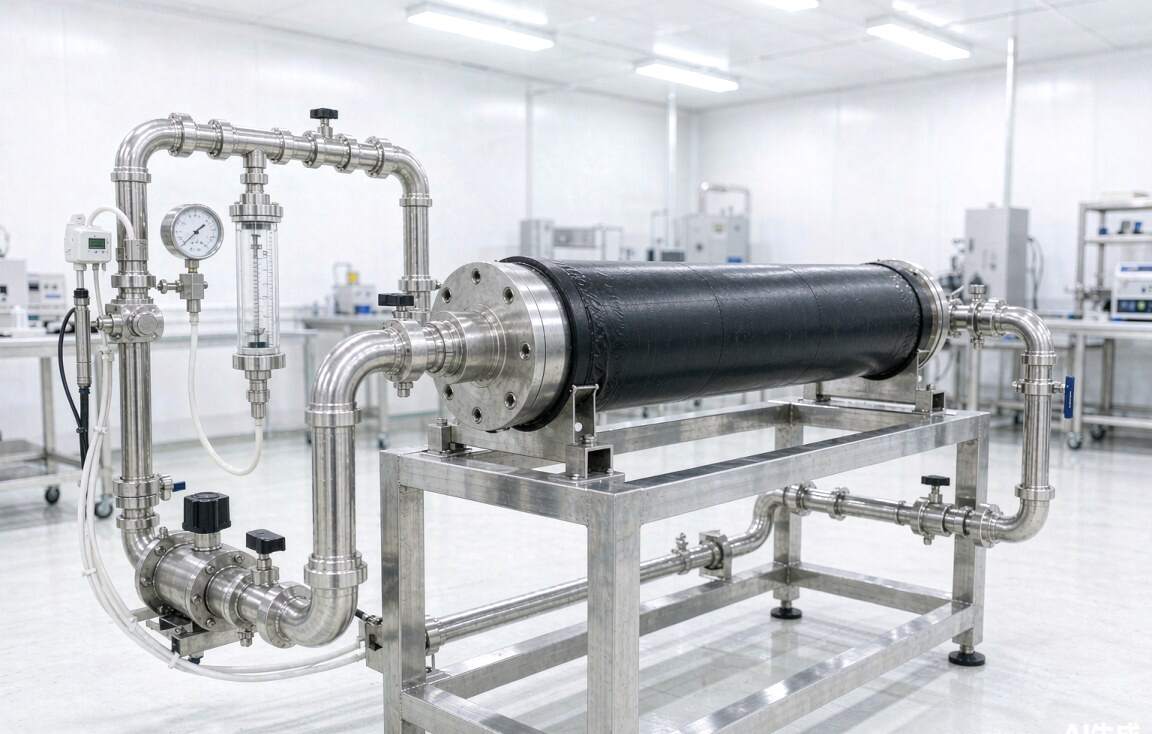
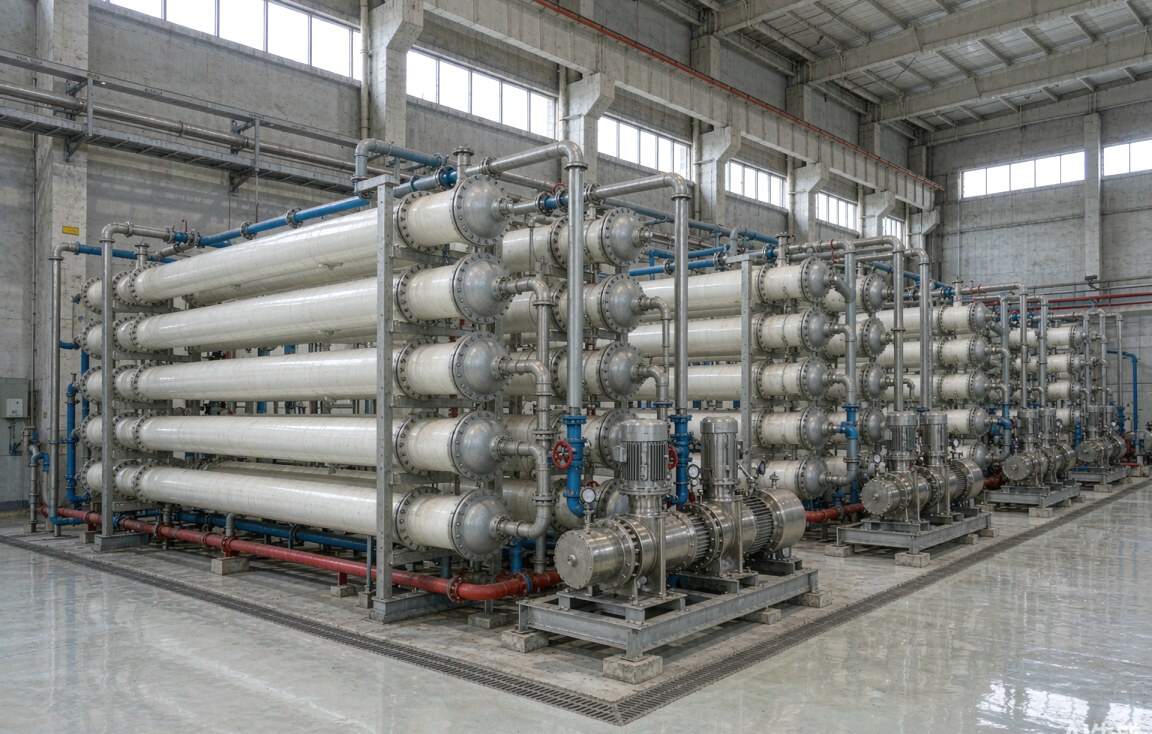
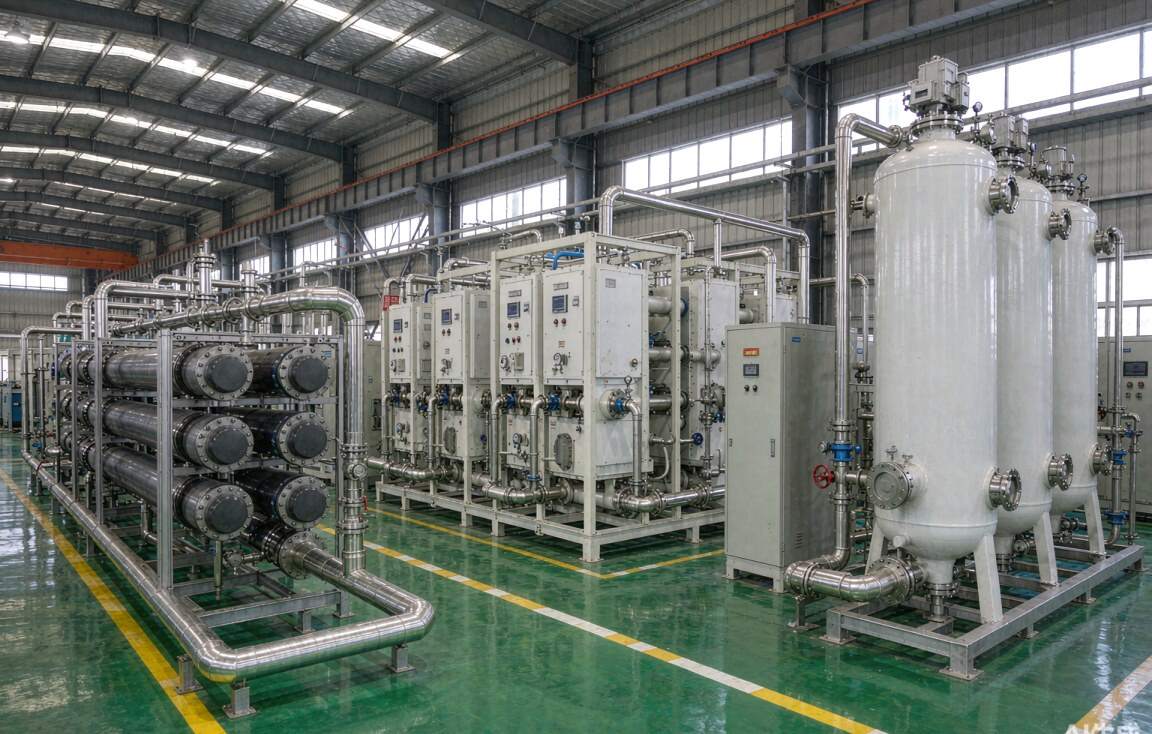
Serving the boiler make-up water of the power plant attached to a 1.72 Mt/a coking project, the 2 × 80 m³/h demineralized water station was fully re-membraned using multi-media filtration + UF + two-pass RO + EDI, achieving permeate conductivity of 47.6–55 μS/cm.
CokingBoiler Make-up WaterTwo-Pass RO + EDIFull Station Change-out
2 × 80Station capacity m³/h
98.5–98.8Salt rejection %
≈75Recovery %
≤4000Feed conductivity μS/cm
01
Project Overview
Client, scale, feed water and project background
The power plant attached to the 1.72 Mt/a coking project of Hejin Yumenkou Coking Co., Ltd. uses boiler make-up water as its main water demand. Performance of the elements in the demineralized water station had decayed, requiring a full station membrane change-out. The station is sized at 2 × 80 m³/h and fed with local tap water.
The process is pretreatment (multi-media filtration MMF) + ultrafiltration (UF) + two-pass RO + EDI, where EDI handles polishing demineralization and continuous production. EDI places demanding requirements on RO permeate conductivity and its stability, since the stability of the RO section directly determines EDI operating current and product resistivity.
The contract was signed in September 2022, with both parties agreeing to start on site on 20 September; the units were handed over for trial operation after installation. Assessment was performed under stable feed quality at conductivity ≤4000 μS/cm: minimum rejection ≥98% within the warranty period, ≥95% over service life, nitrogen removal ≥80% over service life, guaranteed element service life ≥3 years, membrane flux ≤18 lmh, RO flushing interval ≥24 h and chemical cleaning interval ≥30 days.
- Client
- Hejin Yumenkou Coking Co., Ltd. (1.72 Mt/a coking project)
- Location
- Hejin, Yuncheng, Shanxi Province
- Project type
- RO membrane replacement at the demineralized water station (2 units)
- System scale
- 2 × 80 m³/h
- Feed water
- Local tap water (conductivity ≤4000 μS/cm)
- Product water use
- Power plant boiler make-up water
- Process
- Pretreatment (MMF) + UF + two-pass RO + EDI
- Acceptance date
- September 2022
02
Process Design
System flow, design boundaries and key control points
01Tap water
→02Multi-media filter MMF
→03Ultrafiltration UF
→04Cartridge filter
05First-pass RO
→06Second-pass RO
→07EDI
→08Demineralized tank
09Boiler make-up water
→→→EDI is sensitive to CO₂ and conductivity in its feed; the stability of second-pass RO permeate conductivity is the key control point for the resistivity of the station's final product water.
Two-pass RO as the EDI safeguard
The second RO pass holds permeate conductivity at 47.6–55 μS/cm, giving EDI a low-load, low-conductivity feed and extending EDI module life.
MMF + UF dual pretreatment
Multi-media filtration removes suspended solids and part of the organics, while UF further controls SDI to meet the element requirement of SDI ≤5.
Dual constraint of flux and cleaning interval
Designed at membrane flux ≤18 lmh together with flushing interval ≥24 h and chemical cleaning interval ≥30 days, keeping operating intensity within the membrane manufacturer's recommended range.
Full station change-out with parameter re-calibration
After replacement, recovery and inter-stage pressure were re-calibrated on both systems so that permeate deviation between the two units stays controllable under the same feed conditions.
03
Key Equipment & Membrane Configuration
Membrane models, loading arrangement and auxiliary equipment
| Item | Design / contractual requirement | Measured at acceptance |
|---|---|---|
| System scale | 2 × 80 m³/h | 2 units in parallel |
| Process route | MMF + UF + two-pass RO + EDI | Built to drawing |
| Rejection within warranty period | ≥98% | 98.5%–98.8% |
| Rejection over service life | ≥95% | Achieved |
| Nitrogen removal over service life | ≥80% (operating pH <7) | Achieved |
| Membrane element service life | ≥3 years | Per contract guarantee |
| Membrane flux | ≤18 lmh | Design value compliant |
| Flushing / chemical cleaning interval | ≥24 h / ≥30 days | Executed per procedure |
Feed is assessed at conductivity ≤4000 μS/cm; 'Achieved' above means the acceptance record confirms the contractual value was met.
04
Operating & Acceptance Data
Field measurements versus contractual guarantee values
| Operating indicator | System 1# | System 2# |
|---|---|---|
| Feed conductivity μS/cm | 3870 | 3870 |
| Permeate conductivity μS/cm | 47.6 | 55.0 |
| Salt rejection % | 98.8 | 98.5 |
| Feed pressure MPa | 1.32 | 1.38 |
| Inter-stage pressure MPa | 1.25 | 1.28 |
| Concentrate pressure MPa | 1.1 | 1.1 |
| Recovery % | 74.9 | 75.9 |
Operating data of both systems met the acceptance criteria. Recovery is controlled at around 75%, balancing permeate output against scaling risk.
05
Project Results
Client acceptance conclusions and reusable engineering experience
✓
Successful start-up after a full station change-out
Both 80 m³/h systems went straight into trial operation after installation, with no element leakage or permeate shortfall.
✓
Improved EDI feed conditions
RO permeate conductivity of 47.6–55 μS/cm provides EDI with a stable low-conductivity feed, restoring product resistivity to design level.
✓
All contractual indicators met
Rejection of 98.5%–98.8% exceeds the 98% warranty requirement; flux, cleaning interval and other operating constraints all stayed within design range.
✓
Complete experience for coking water stations
A full station change-out and parameter calibration method for MMF + UF + two-pass RO + EDI has been established, transferable to comparable coking power plant projects.